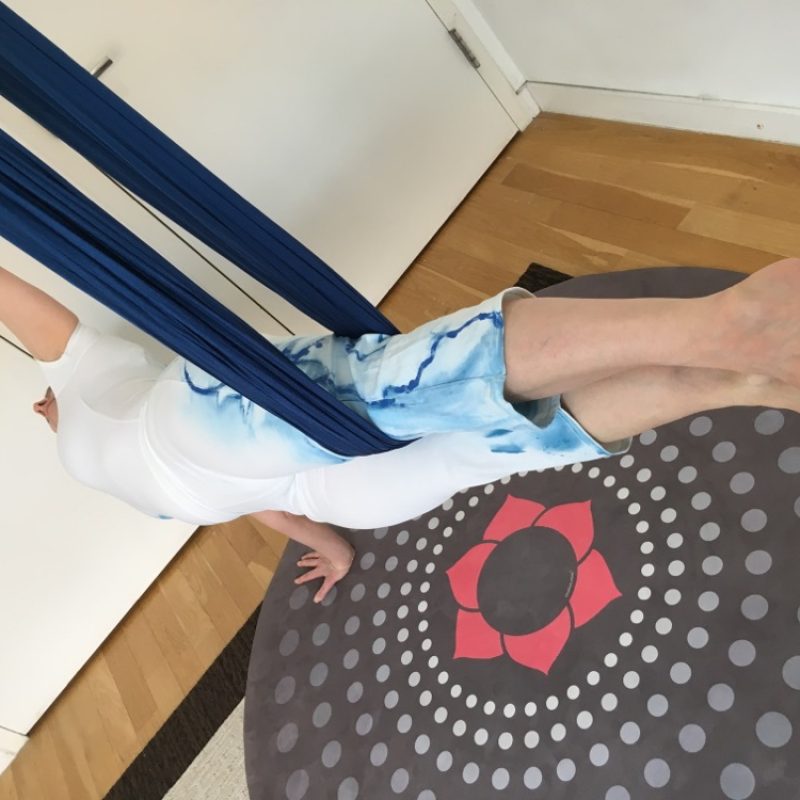
In addition to core strengtheners, this class includes: Halasana (Plow), Vishvamittrasana, and a way to practice Parsva Sarvangasana (Side Shoulderstand).
$12.00
What are your highest priorities? What belief(s) do you hold so close to your heart, that they continually define how you live your life?
Whether raised with religion or not, most of us have a set of ethics we use to guide us through sometimes sticky situations. It’s not always easy to follow our ethics, and to boot, sometimes our beliefs can even be at odds with each other. For example, you probably believe in values like kindness and honesty, both. But, what do you say when your friend asks if you like the outfit they are wearing, and you think it is hideous? You want to be honest, but expressing your true opinion would not be kind. For this example, most people would opt for kindness and make up some sort of “white lie.” But, not every situation is this easy to navigate. And, when our beliefs conflict, it causes stress and distress. We can feel as if we are being “pulled apart.”
The Yamas found in the Yoga Sutras of Patañjali act as ethical guidelines for yogis. Knowledge of the Yamas can be helpful when in uncertain situations. Because they are written in order of priority, the Yamas give guidance on which way to act during those times when a situation pits two ethical beliefs against each other. Ahimsa (non-harming) is a higher priority than satya (honesty), which has a higher priority than asteya (non-stealing). Next in the list is brahmacharya (celibacy, or “dedicate oneself to spiritual pursuits” might be a more modern way to define it), and finally, aparigraha (non-hoarding).
When we think of “core values,” we think of the central pillar of our attitudes from which our actions arise or are guided. In order to take action, though, we need to have a body. And from a physical perspective, the core is a term referring to a group of muscles (and ligaments and tendons) that create physical stability. Our physical core determines our ability to move through space, and the quality that movement will have. Our core values (or spiritual core), determines our ability to move through ethical decisions, and the type of life we will lead.
So, if you think about it, because your body, mind and spirit all work together to make you, you, strengthening your physical core simultaneously helps strengthen your ethical will.
This week, don’t let Life’s ethical quandaries pull you apart. Instead, pull yourself together! Through a strong physical practice, we’ll work on our “core” values.
In addition to core strengtheners, you can expect: Halasana (Plow), Vishvamittrasana, and a way to practice Parsva Sarvangasana (Side Shoulderstand).